
Are You Making These Surprising Prep Mistakes That are Ruining Your Dishes?
Woodward Eats
Archives
Are You Making These Surprising Prep Mistakes That are Ruining Your Dishes?
SIGN UP FOR OUR NEWSLETTER
The Shocking Prep Mistakes Making Your Dishes Taste Bland |
Why Your Food Falls Flat Before It Even Touches the Pan |
 |
Breaking old habits is hard. Everyone says it is easy, but honestly, it feels more like trying to unlearn the way you breathe. You do something in the kitchen for fifteen years, and suddenly some article tells you it is wrong. And even though, deep down, you know your food has tasted a little flat or, I do not know, tired, it still feels weird to admit that the habits themselves are the culprit. Not you.
Sometimes I think cooking is like updating old software. You keep hitting ignore update because it feels safer to skip the changes. Until one day the whole system slows down, the apps glitch, the food tastes off, and you wonder why you resisted upgrading for so long. I had this moment last month making breakfast. Eggs sticking, smoke going everywhere, dog barking in the background. It felt like the universe was hinting at something.
Anyway. If you want better food, you need better habits. And not the trendy kind. Just the ones that work. Below are a few outdated practices that quietly sabotage your meals before they even touch heat. Some might feel weird to let go of. Some might feel obvious. All of them are worth changing.
1. Cooking on a Cold PanThis is probably the sneakiest mistake because it feels harmless. You toss ingredients in while the pan is still warming up. Maybe you are in a rush or maybe you just assume the food will warm with it. I used to do it constantly. Especially when cooking after a long day, like after watching that messy 2025 Super Bowl and trying to whip up something quick during halftime.
But here is what happens. A cold pan turns everything bland. Protein leaks water, vegetables get limp, mushrooms behave like they are sweating through their shirts at a summer concert. Nothing browns. Nothing crisps. It is like trying to toast bread in a freezer.
Why it slows you down is simple. No heat means no sear. And no sear means no flavor. You lose aroma, color, texture, and then you get this sad beige food that looks like hospital lunch.
The shift is simple: heat first. Pan, then fat, then food. I tap the pan sometimes to hear the little hiss. It feels oddly satisfying, like a secret door opening.
2. Overcrowding the PanEveryone does this. Even people who swear they never do. It is a trap because it feels efficient. Put everything in one spot, let it cook, save a bit of time. But that is exactly how you steam your dinner into a soggy, confused mess.
A packed pan cannot breathe. The temperature drops fast. Moisture gathers. What should have browned ends up squishy. I have destroyed so many good ingredients this way. One time I tried to make a stir fry for six people in one skillet and the result tasted like wet cardboard. My friend politely pretended it was fine.
Crowding holds you back because it steals your browning. Browning is flavor. Steaming is not. Steaming is sadness.
The fix. Cook in batches. Yes it takes longer. No it is not glamorous. But restaurants do it because it works every time. You get color, crisp edges, caramel aroma. Suddenly the dish wakes up.
3. Seasoning Only at the EndThis one might be the most stubborn habit because a lot of parents grew up repeating myths about salt. Salt dries things. Salt makes meat tough. Salt will ruin everything. So beginners add it only at the very end like some kind of lucky charm.
The problem is that seasoning at the end creates surface-level flavor and nothing else. It is like trying to fix a dull photograph by slapping a filter on it. No depth. No structure.
Salt early, taste often. Salt helps pull moisture in the right direction, helps proteins relax, helps vegetables release and then reabsorb flavor. When you wait until the end, the salt just sits there like it is disappointed in your choices.
A small sprinkle as you go is enough. Think of it as guiding the dish instead of rescuing it.
4. Following Cooking Times Like They Are Federal LawBeginners cling to timers because they want rules. Structure. Safety. I get it. A recipe says cook for seven minutes, so you cook for seven minutes. But cooking is not a court document.
Ovens run hotter or colder. Meat sizes change. Vegetables vary. I bought a bag of carrots recently that must have grown in some extreme Oklahoma soil because they took twice as long to soften as usual.
Timers are suggestions. Not commands. When you rely on them alone, you never learn how to read food. You only learn to read numbers. And that makes cooking unpredictable, like driving with a foggy windshield. Use your senses. Look for color. Listen for the sizzle. Smell when something changes from raw aroma to warm aroma. Touch the food gently to feel firmness. Taste a tiny piece. You will learn more from one honest taste than five minutes of staring at a clock.
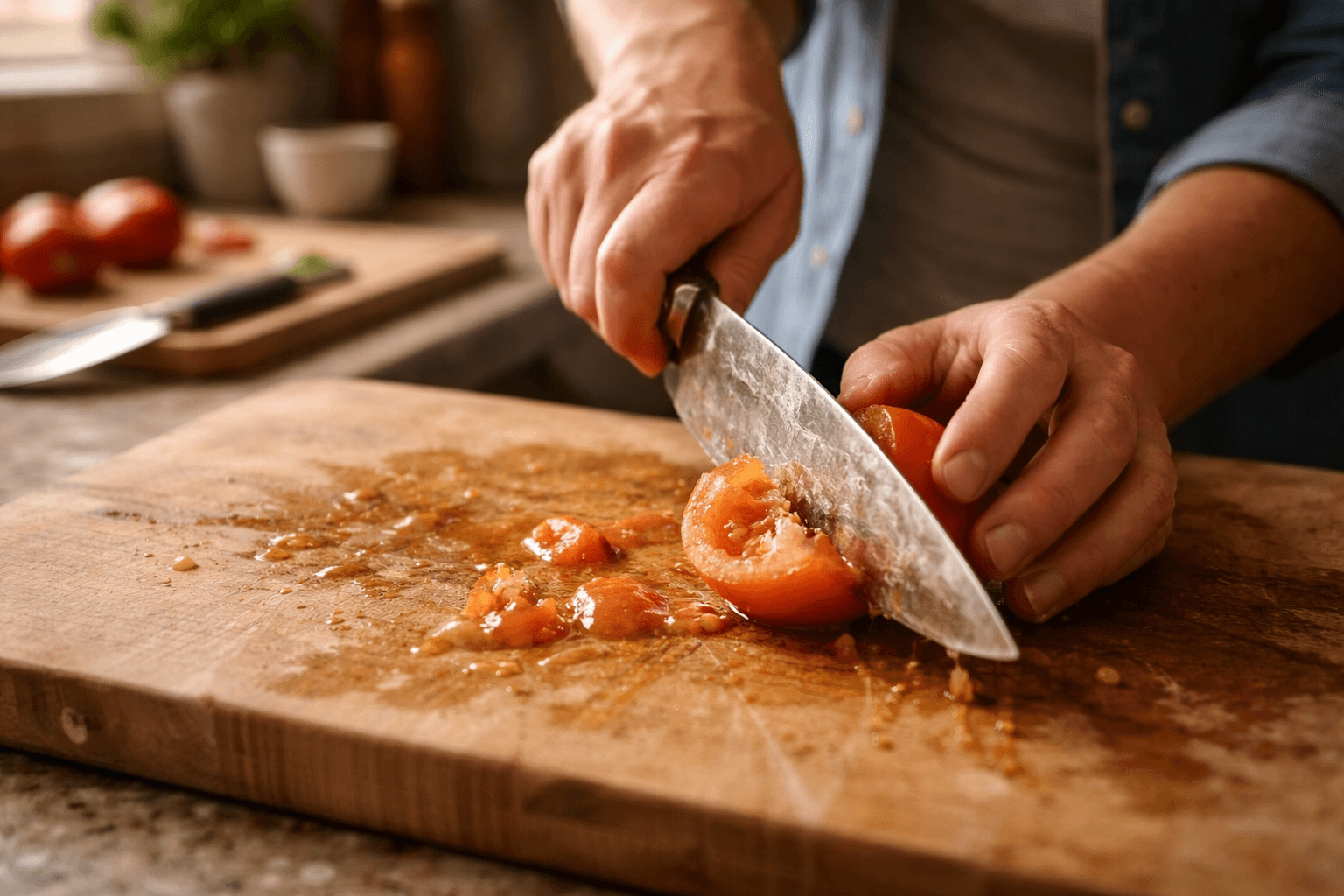
5. Using One Sad Knife for Every TaskThis one is small but mighty. Many beginners use a single dull knife for everything. Tomatoes. Onions. Meat. Bread. It is like trying to play every instrument in an orchestra with one flute. It will not sound good. Uneven cuts cook unevenly. Your onions burn while your peppers stay crunchy. Your chicken pieces cook at different speeds. It is chaos on a plate.
Upgrade to a sharp chef knife. Nothing fancy. Just sharp. Learn to hold it safely. Practice ten minutes a week. Suddenly cooking feels calmer. Faster. Cleaner. Your food cooks evenly. Your cutting board stops looking like a crime scene.
The Upgrade Starts Now
Habits take time to break. Sometimes they fight back. You might do all of this right for three days, forget on day four, and swear the universe is against you. That is normal. Do not quit. Do not slide back into the old routine because it feels cozy or nostalgic. Nostalgia cannot save your dinner.
Stop cooking like this unless you want your meals to fail before they even hit the pan. You deserve better food. Better confidence. Better experiences in your own kitchen.
Upgrade. Adjust. Try again. And let the next dish be the beginning of a version of you who cooks with intention instead of autopilot. This is your moment. Grab it before the pan gets cold. |